Dialogue on the Threshold

Schwellendialog

31 December 2019

Before Brezhnev Died


Iulian Ciocan, Before Brezhnev Died, Dalkey Archive Press, 2019

The time is the twilight of the decrepit Brezhnev regime, the place, the Soviet Socialist Republic of Moldavia: the "Latin periphery of empire." A pensioner seeks justice for his dead wife, crushed by a falling crane--the very symbol of the "construction of socialism"--but comes up against hostility from a cynical system at best indifferent, at worst contemptuous of human life. With a keen, Gogolian eye for the grotesque, often squalid, details of everyday life in the USSR, Iulian Ciocan paints darkly humorous but compassionate portraits of Homo sovieticus, from crusty war veterans and lowly collective farm workers to venal Party bigwigs, as each comes to the disturbing realization that the lofty ideals of Soviet society were lies all along. And for idealistic young pioneer Iulian, the biggest disillusionment of all will be the abrupt revelation of Brezhnev's mortality.

Înainte să moară Brejnev / Before Brezhnev Died

Living Tissue


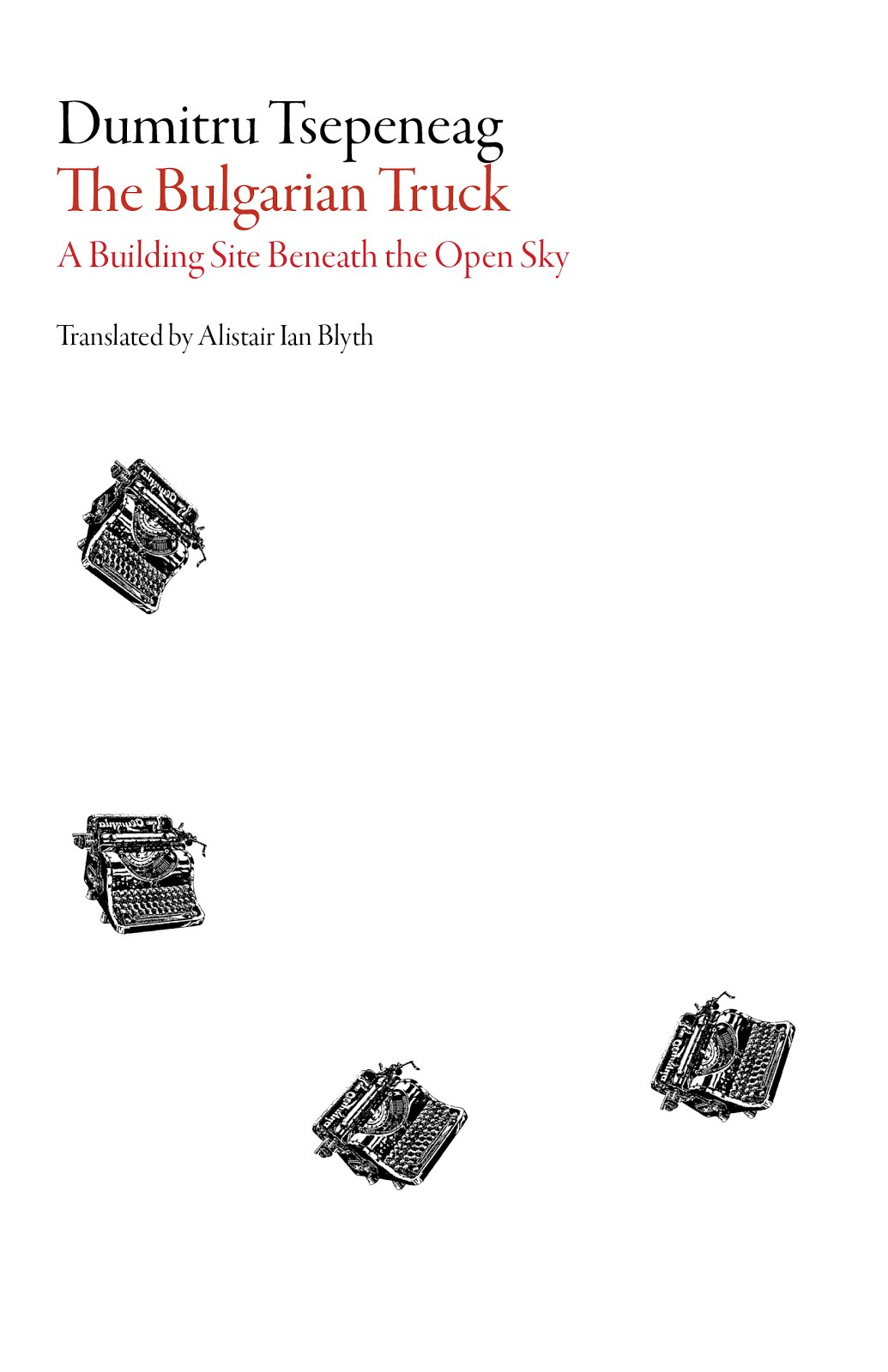
Emilian Galaicu-Păun, Living Tissue. 10x10, Dalkey Archive Press, 2019

With each chapter embodying a separate Commandment, Living Tissue, 10x10 is both a Decalogue and a ribald, exuberant, deliriously inventive postmodern Decameron, which covers four decades in the life of the protagonist, unfolding against the backdrop of Soviet and post-communist Moldova, from the untimely death of Yuri Gagarin in 1968 to the so-called "twitter revolution" of 2009. Tens of tragical, comical, fantastical, historical tales intertwine, punctuated by the endless upheavals suffered by twentieth-century Moldova. But the narrative also takes euphoric flight, in episodes that travel as far afield as Paris, Moscow, and Tibet. In Living Tissue. 10x10, Emilian Galaicu-Păun engages in literary origami, bending and blending together real and fictional worlds, abolishing up and down, here and there, past and present, as if in an Escher engraving, alternating narrative techniques, braiding myth, history and literary allusion, transgressing the boundaries of languages and cultures to create a rapturously intricate novel in ten dimensions.

26 October 2019

Ulterior ends

Poetry may have also an ulterior value as a means to culture or religion; because it conveys instruction, or softens the passions, or furthers a good cause; because it brings the poet fame or money or a quiet conscience. So much the better: let it be valued for these reasons too. But its ulterior worth neither is nor can directly determine its poetic worth as a satisfying imaginative experience; and this is to be judged entirely from within. . . . The consideration of ulterior ends, whether by the poet in the act of composing or by the reader in the act of experiencing, tends to lower poetic value. It does so because it tends to change the nature of poetry by taking it out of its own atmosphere. For its nature is to be not a part, nor yet a copy, of the real world (as we commonly understand that phrase), but to be a world by itself, independent, complete, autonomous; and to possess it fully you must enter that world, conform to its laws, and ignore for the time the beliefs, aims and particular conditions which belong to you in the other world of reality. 

A.C. Bradley, "Poetry for Poetry's Sake" (1901),  
Oxford Lectures on Poetry, Macmillan, London, 1963, pp. 4-5

Delusional significance

A patient noticed the waiter in the coffee-house; he skipped past him so quickly and uncannily. He noticed odd behaviour in an acquaintance which made him feel strange; everything in the street was so different, something was bound to be happening. A passer-by gave such a penetrating glance, he could be a detective. Then there was a dog who seemed hypnotised, a kind of mechanical dog made of rubber. There were such a lot of people walking about, something must surely be starting up against the patient. All the umbrellas were rattling as if some apparatus was hidden inside them. . . . Something must be going on; the world is changing, a new era is starting. Lights are bewitched and will not burn; something is behind it. A child is like a monkey; people are mixed up, they are imposters all, they all look unnatural. The house-signs are crooked, the streets look suspicious; everything happens so quickly. The dog scratches oddly at the door. 'I noticed particularly' is the constant remark these patients make, though they cannot say why they take such particular note of things nor what it is they suspect.

Karl Jaspers, General Psychopathology, Volume One, 
translated by J. Hoenig and Marian W. Hamilton, 
Johns Hopkins University Press, Baltimore and London, 1997, p. 100

01 September 2019

a beam of light (2)

One morning, some eight or nine days after our arrival, I looked out of my window and saw the whole landscape transformed before me. The clouds had dipped low and hidden the mountain in the west; a southern wind was driving the rain in shifting pillars up the valley, and the little brooklet that burst the hill below the house now raged, a red torrent, down the river.  We were perforce obliged to keep snug within-doors; and when I had attended to my pupils, I sat down in the morning-room where the ruins of a library still encumbered an old-fashioned bookcase. I had inspected the shelves once or twice, but their contents had failed to attract me; volumes of eighteenth-century sermons, an old book on farriery, a collection of Poems by "persons of quality," Prideaux's Connection, and an odd volume of Pope were the boundaries of that library, and there seemed little doubt that everything of interest or value had been removed. Now however, in desperation, I began to re-examine the musty sheepskin and calf bindings, and found, much to my delight, a fine old quarto printed by the Stephani, containing the three books of Pomponius Mela, De Situ Orbis, and other of the ancient geographers. I knew enough of Latin to steer my way through an ordinary sentence, and I soon became absorbed in the odd mixture of fact and fancy--light shining on a little space of the world, and beyond, mist and shadow and awful forms.

Arthur Machen, "Novel of the Black Seal", The Three Imposters, 1895

13 August 2019

a beam of light

As we have seen, purely intentional correlates of connected sentences can enter into manifold relationships and interrelations. And since among the sentence correlates there are also states of affairs which occur in the ontic range of one and the same object, as well as states in which events and interconnections between individual objects are represented, the represented objects also do not lie isolated and alien alongside one antother but, thanks to the manifold ontic connections, unite into a uniform ontic sphere. In doing so they always constitute--quite remarkably--a segment of a still largely undetermined world, which is, however, established in accord with its ontic type and the type of its essence, that is, a segment whose boundaries are never sharply drawn. It is always as if a beam of light were illuminating a part of a region, the remainder of which disappears in an indeterminate cloud but is still there in its indeterminacy. 

Roman Ingarden, The Literary Work of Art: 
An Investigation  on the Borderlines of Ontology, Logic, and Theory of Literature
trans. George G. Grabowicz, Northwestern University Press, Evanston, 1973, p. 218

28 July 2019

de statu post mortem

'Hell?' breathed Miss Lacey.

'"The state after death",' called Mr Sully, still peering into the gloom--and stepped back rather hurriedly in the intense pale lilac illumination of a sudden flickering blaze of lightning.

Thunder now clanged directly overhead, and still Mr Eaves gazed softly yet earnestly into nothingness, as if in deep thought.

'Whatever you like to call it,' he began again steadily pushing his way, 'that's how I take it. I sit with my wife, all just the same; cap and "front" and all, just the same; gas burning, decanter on the table, books in the case, marble clock on the mantelpiece, just the same. Or perhaps I'm walking in the street, just the same; carts and shops and dogs, all just the same. Or perhaps I'm here, same as I might be now; with Sully there, and you there, and him there,' he nodded towards the commissionaire. 'All just the same. For ever, and ever, and ever.' He raised his empty glass to his lips, and glanced almost apologetically towards his old friend. 'For ever, and ever,' he repeated, and put it down again.

'He simply means,' said Mr Sully, 'no change. Like one of those blessed things on the movies; over and over again, click, click, click, click, click; you know. I tell him it's his sentence, my dear.'

'But if it's the same,' Miss Lacey interposed, with a little docile frown of confusion, 'then what's different?' (...)

'Why,' said Mr Eaves, 'it seems as if there I can't change either; can't. If you were to ask me how I know--why, I couldn't say. It's a dream. But that's what's the difference. There's nothing to come. Now: why! I might change in a score of ways; just take them as they come. I might fall ill; or Mrs Eaves might. I might come into some money; marry again. God bless me, I might die! But there, that's all over; endless; no escape; nothing. I can't even die. I'm just meself, Miss Lacey; Sully, old friend. Just meself, for ever, and ever. Nothing but me looking on at it all, if you take me--just what I've made of it. It's my'--his large pale eyes roved aimlessly--'it's just what Mr Sully says, I suppose; it's my sentence. Eh, Sully? wasn't that it? My sentence?' He smiled courageously.

'Sentence, oh no! Sentence? You!' cried Miss Lacey incredulously. 'How could you, Mr Sully? Sentence! Whatever for, sir?'

Mr Eaves again glanced vaguely at the sleeper, and then at his friend's round substantial shoulders, rigidly turned on him. He fixed his eyes on the clock.

'You've never done no harm, Mr Eaves!' cried Miss Lacey, almost as if in entreaty.

'You see,' said the old gentleman, glancing over his shoulder, 'it isn't what you do: so I seem to take it.' Mr Sully half turned from the door, as if to listen. 'It's what you are,' said Mr Eaves, as if to himself.

'Why, according to that,' said Miss Lacey, in generous indignation, 'who's safe?'

Walter de la Mare, "The Three Friends"
First published in Saturday Westminster Gazette, 19 April 1913;
The Picnic and Other Stories, 1941;
Short Stories 1895-1926, ed. Giles de la Mare, London, 1996, p. 97-98

20 July 2019

tenebrae exteriores interioresque

'I see a huge city of granite,' he grunted; 'I see lean spires of metal and hazardous towers, frowning upon the blackness of their shadows. White lights stare out of narrow window-slits: a black cloud breathes smoke in the streets. There is no wind, yet a wind sits still upon the city. The air smells like copper. Every sound rings as it were upon metal. There is a glow--a glow of outer darkness--a glow imagined by straining eyes. The city is a bubble with clamour and tumult rising thin and yellow in the lean streets like dust in a loampit. The city is walled as with a finger-ring. The sky is dumb with listeners. Far down, as the crow sees the ears of wheat, I see that mote of a man in his black clothes, now lit by flaming jets, now hid in thick darkness. Every street breeds creatures. They swarm gabbling, and walk like ants in the sun. Their faces are fierce and wary, with malevolent lips. Each mouths to each, and points and stares. On I walk, imperturbable and stark. But I know, oh, my boy, I know the alphabet of their vile whispering and gapings and gesticulations. The air quivers with the flight of black winged shapes. Each foot-tap of that sure figure upon the granite is ticking his hour away.' My uncle turned and took my hand. 'And this, Edmond, this is the man of business who purchased his game in the city, and vied with all in the excellence of his claret. The man who courted your aunt, begot hale and whole children, who sits in his pew and is respected. That beneath my skull should lurk such monstrous things! You are my godchild, Edmond. Actions are mere sediment, and words--froth, froth. Let the thoughts be clean, my boy; the thoughts must be clean; thoughts make the man. You may never at any time be of ill repute, and yet be a blackguard. Every thought, black or white, lives for ever, and to life there is no end.'

'Look here, Uncle,' said I, 'it's serious, you know, you must come to town and see Jenkinson, the brain man. A change of air, sir.'

'Do you smell sulphur?' said my uncle.
 

Walter de la Mare, "A Mote"
First published in Cornhill Magazine, August 1896, 'by Walter Ramal';
Short Stories 1895-1926, ed. Giles de la Mare, London, 1996, p. 419


16 June 2019

la réalité la plus inférieure

[L]a « solidification » du monde, si loin qu'elle soit poussée effectivement, ne peut jamais être complète, et il y a des limites au delà desquelles elle ne saurait aller, puisque, comme nous l'avons dit, son extrême aboutissement serait incompatible avec toute existence réelle, fût-elle du degré le plus bas ; et même, à mesure que cette « solidification » avance, elle n'en devient toujours que plus précaire, car la réalité la plus inférieure est aussi la plus instable ; la rapidité sans cesse croissante des changements du monde actuel n'en témoigne d'ailleurs que d'une façon trop éloquente.

René Guénon, Le Règne de la quantité et les signes des temps, 1945

29 May 2019

Stupidity and vulgarity

To discriminate schools, of art, of literature, is, of course, part of the obvious business of literary criticism: but, in the work of literary production, it is easy to be overmuch occupied concerning them. For, in truth, the legitimate contention is, not of one age or school of literary art against another, but of all successive schools alike, against the stupidity which is dead to the substance, and the vulgarity which is dead to the form.

Walter Pater, "Romanticism", Macmillan's Magazine, November 1876

30 April 2019

Bottom


Where then will that soul hide itself, which to the eyes of so many spectators will have been suddenly exposed in all its shame? With what kind of body will it endure those endless and unbearable torments, where is the fire unquenched, and the endlessly punishing worm, and the dark and fearful nethermost reach (*) of hell, and bitter moans, and violent yelling, and weeping and gnashing of teeth, and horrors without end? From these there is no release after death, there is no device or means to escape these bitter punishments.

(*) πυθμὴν - base, foundation, root (of a tree), bottom (of a jar or cup), bottom (of the sea), socket, fundus of a univalve, the hollow beneath the foot of a goblet, stock of a family, base of an arithmetical series

ποῦ ἄρα ἡ ψυχὴ ἐκείνη καταδύσεται, ἡ ἐν ὄψεσι τοσούτων θεατῶν ἐξαίφνης ὀφθεῖσα αἰσχύνης ἀνάπλεως; ποίῳ δὲ σώματι τὰς ἀπεράντους ἐκείνας καὶ ἀνυποίστους ὑποστήσεται μάστιγας, ὅπου πῦρ ἄσβεστον, καὶ σκώληξ ἀθάνατα κολάζων, καὶ πυθμὴν ᾅδου σκοτεινὸς καὶ φρικώδης, καὶ οἰμωγαὶ πικραί, καὶ ὀλολυγμὸς ἐξαίσιος, καὶ κλαυθμὸς καὶ βρυγμὸς ὀδόντων, καὶ πέρας οὐκ ἔχει τὰ δεινά; τούτων οὐκ ἔστιν ἀπαλλαγὴ μετὰ θάνατον, οὐδέ τις ἐπίνοια, οὐδὲ μηχανὴ τοῦ διεκδῦναι τὰ πικρὰ κολαστήρια.

Epistola XLVI. Ad Virginem lapsam. Sancti Nostri Basilii Caesareae Cappadociae Archiepiscopi Opera Omnia Quae Exstant, Opera et Studio Monachorum Ordinis Sancti Benedicti, e Congregatione Sancti Mauri. Editio Parisina Altera, Emendata et Aucta. Tomus Tertius. Parisiis, apud Gaume Fratres, Bibliopolas, M. DCCC. XXXIX. [pag. 497]

Ubi itaque anima illa abscondetur, quae in oculis tot spectatorum subito visa fuerit dedecoris plena? Quali vero corpore infinita illa et intolerabilia perferet supplicia, ubi ignis inexstinctus, et vermis indesinenter puniens, et imum inferi tenebricosum et horrendum et ululatus amari, et ejulatus ingens, et ploratus, et stridor dentium, et ubi mala finem non habent? Ab his post mortem liberari non datus, neque est industria ulla, neque ars effugiendi amara supplicia.

27 April 2019

Narcissism

But self-love, or the love which reigns in Hell, and is the opposite of that in heaven, consists in a man’s loving himself supremely, and willing well to himself alone, and not to others except for the sake of himself. Such a man has no genuine love of the church, his country, society, or a fellow-citizen. He is not willing to serve them, but loves to have them serve him. And if he performs any uses, or confers any benefits upon others, it is for the sake of his own reputation, honor, or emolument that he does it;— thus for the sake of himself, and not from any regard to the good of his neighbor.
    Such is Hell as to its quality or essence—the complete opposite of Heaven. “The evils proper to those,” says Swedenborg, “who are in the love of self are in general contempt of others, envy, enmity against all who do not favor them, hostility thence derived, various kinds of hatred, of revenge, of cunning, of deceit, together with unmercifulness and cruelty.”

George Bush, From the Memorabilia of Swedenborg; 
Illustrative of His Doctrines and Disclosures
New York, 1848, p. 197

19 April 2019

Congruence

Discrimen inter Ens reale et apparens, qualitatemque realem et apparentem examinatu dignum est. Et quidem quae in somniis apparent, dicimus falsa sive apparentia, non tam quia eorum causa intra nos est neque aliquid externi iis respondet (id enim ut alias dicam nihil obesset), quam potius quia neque cum aliis phaenomenis inter se congruentibus, neque inter se congruunt quae somniamus.

Leibniz, 1685 (?)


The difference between a Being that is real and a Being in appearance, between a quality that is real and a quality in appearance, is worthy of examination. The fact is that we call the things that appear in dreams false or appearances not because their cause is within us or because they are not in accord with anything external (which would be no hindrance, as I shall say elsewhere), so much as because the things that we dream are neither congruent among themselves nor congruent with other phenomena congruent among themselves.

13 April 2019

Somnia testificantur de futura vita

Somnia hoc distant a vita, quod phaenomena vitae sunt ordinata, et quod hinc sequitur universalia: neque enim mea satis ordinata essent, nisi alienis conspirarent. Quia tamen est aliquid in speciem inordinatum in hac vita, no physice quidem, sed moraliter, consentaneum est superesse aliam vitam, cui collata haec habet somnii instar, et morte nos evigilantes ad phaenomena demum pervenire, in quibus huic quoque perturbationi remedium afferatur, ubi praemia poenaeque corriget, quae in hac vita distorta videntur. 

Leibniz, c. 1698

Dreams are separate from life in that the phenomena of life possess an order and hence it follows that they are universal: for the phenomena of my life would not possess sufficient order unless they were in concord with the phenomena of others’ lives. Since in this life there nonetheless exists something lacking in order, not only physically, but also morally, it stands to reason that there is yet another life, compared with which this life has the appearance of a dream, and that awakening from death we at last arrive at phenomena wherein a remedy to this confusion is also brought about, where rewards and punishments will rectify those things that appear distorted in this life.

07 April 2019

Mitbürger des Himmels

. . . ich nicht von den bin so auff ihr Vaterland, oder sonst auff eine gewisse Nation, erpricht seyn; sondern ich gehe auf den Nutzen des gantzen menschlichen Geschlechts; denn ich halte den Himmel für das Vaterland und alle wohlgesinnte Menschen für dessen Mitbürger . . .

Concept eines Briefes von Leibniz an Peter den Grossen, 16. Jan. 1712.

Leibniz in seinen Beziehungen zu Russland und Peter dem Grossen: 
Eine geschischtliche Darstellung dieses Verhältnisses 
nebst den darauf bezüglichen Briefen und Denkschriften
Hrsg. W. Guerrier, Ord. Professor an der Universität Moscau.
St. Petersburg und Leipzig, 1873. 
N. 143. S. 208 

I am not one of those devoted solely to his native land or to one particular nation; rather, I pursue the interests of the whole human race, since I deem heaven my native land and all well-meaning men its fellow citizens.


02 April 2019

tête de mouche

Les plus petits moucherons sont aussi parfaits que les animaux les plus énormes. Les proportions de leurs membres sont aussi justes que celles des autres; et il semble même que Dieu ait voulu leur donner plus d'ornements pour récompenser la petitesse de leur corps. Ils ont des couronnes, des aigrettes, et d'autres ajustements sur leur tête, qui effacent tout ce que le luxe des hommes peut inventer; et je puis dire hardiment que tous ceux qui ne se sont jamais servis que de leurs yeux, n'ont jamais rien vu de si beau, de si juste, ni même de si magnifique dans les maisons des plus grands princes, que ce qu'on voit avec des lunettes sur la tête d'une simple mouche.

Malebranche, De la recherche de la vérité (1674-75)

30 March 2019

écrivain et traducteur

Quand on écrit, il faut penser au martyre du lecteur et du traducteur. C'est en songeant à ce dernier surtout que l'écrivain devrait faire n'importe quel sacrifice pour être net et compréhensible. 

Emil Cioran, Cahiers 1957-1972, Éditions Gallimard, 1997, p. 644.

09 January 2019

In somnio

[S]upposons qu'un homme songe fort longtemps; par exemple quelques années de suite, que pourroit il faire en ce temps; il ne pourroit pas lire dans les livres, ny chercher les plantes dans les champs, ny examiner les corps avec un microscope. Il ne pourroit même faire des experiences sur son corps; il ne luy resteroient que celles qui se peuvent faire sur l'espirt, or les experiences qui se peuvent faire sur l'esprit, ce sont elles, qui se font en examinant nos idées, et qui nous donnent des demonstrations en Geometrie, Arithmetique, Metaphysique.

Ainsi on m'avouera que celuy qui songe n'est capable d'autres verités que de celles qui se tirent de l'esprit même. Donc l'art d'inventer, et de perfectionner l'esprit en luy même, servant à tous les estats de l'ame, doit estre sur tout estimée. 

Leibniz, 1676


28 October 2018

Umbra

[T]he tide that rose in the unconscious after the first World War was reflected in individual dreams, in the form of collective mythological symbols which expressed primitivity, violence, cruelty: in short, all the powers of darkness. When such symbols occur in a large number of individuals and are not understood, they begin to draw these individuals together as if by magnetic force, and thus a mob is formed. Its leader will soon be found in the individual who has the least resistance, the least sense of responsibility and, because of his inferiority, the greatest will to power. He will let loose everything that is ready to burst forth, and the mob will follow with the irresistible force of an avalanche. [...] He was the most prodigious personification of all human inferiorities. He was an utterly incapable, unadapted, irresponsible, psychopathic personality, full of empty, infantile fantasies, but cursed with the keen intuition of a rat or a guttersnipe. He represented the shadow, the inferior part of everybody's personality, in an overwhelming degree, and this was another reason they fell for him. 
Carl Gustav Jung, "The Fight with the Shadow", 
first published in The Listener (London), XXXVI (1946), no. 930, 615-16.

27 May 2018

The sad horrour and mad aspect of this strange theatre

For that mankind is in a lapsed condition it cannot be denied, nor that a great part of the invisible powers are sunk into the animal life with them. Now that which is the most high and powerful in the animal life will not let its hold go so long as it can hang on. Whence the most active spirits in this region get the dominion over the more passive, and the kingdom of the prince of the air has proved very large over the nations of the earth, they being so deeply lapsed and immersed into the animal nature. Wherefore we cannot expect but that both the rulers and the ruled having fallen from the holy light and the divine benignity of the aethereal nature, that the effects of that government and the garb of their manners should be cruel, squalid, deformed and ridiculous; a judicious sense of true pulchritude and decency not being able to reside in so dark and distempered complexions, and their envious guardians caring more to tyrannize over them and to make sport with them than to spare them or to be true guides to them in any thing. All therefore that can be done is, to mitigate as well we can the sad horrour and mad aspect of this strange theatre, which strikes the fancy so strongly and so harshly. 
Third Dialogue, Henry More, Divine Dialogues 
 Containing Disquisitions Concerning the Attributes and Providence of God, 1668


Humanum enim genus in lapsa conditione esse constitutum non potest negari, mangamque Invisibilium Potestatum partem in vitam Animalem cum ipsis pariter subsedisse. Nunc vero illud quod supremum est et potentissimum in Vita Animali manus prensuram non laxabit, quamdiu potest inhærere. Unde maxime activi Spiritus in hac Regione Dominium obtinent in magis Passivos Regnumque Principis Aeris reperitur admodum longe lateque extensum super nationes Terræ quippe tam profunde in Animalem Naturam lapsas et immersas. Quamobrem cum tam Principes quam subditi e sacra Luce Divinaque Benignitate Naturæ Æthereæ ceciderunt, expectare non possumus quin effecta illius Regiminis, Morumque ratio crudelis sit, squalida, deformis ac ridicula, quippe quum judicium sensusque veræ pulchritudinis ac Decori in tam tenebroso maleque temperato Temperamento residere nequeat, invidique ipsorum Præsides Aerei id curent magis quo Tyrrannidem in ipsos exerceant misereque ludificentur, quam ut eis parcant aut præsidio sint, exemplove eis præeant in ulla re bona. Summa igitur rei quo collineatum oportet, est mitigare quantum possumus funestum horrorem, vesanumque aspectum miri hujus Theatri quod Imaginationem tam fortitur duriterque ferit. 

Dialogus Tertius, Dialogi Divini Per Autorem Latine redditi 
Disquisitiones Varias et Instructiones Continentes de Attributis et Providentia Dei
Londini, Typis J. Macock, impensis J. Martyn & Gualt. Kettilby, 1679

24 April 2018

Totus mundus verminosus

Sed age ducam te per vastum Macrocosmum, ut innumera vermium agmina, seu tamen excrementa eorum animata, vel seminia foecunda, aut ovula, sicque mortem vivam in quovis angello et rimula speculeris, vereque cum Drexelio dicas ubique mors est, omnibus locis, omnibusque momentis insidiatur: quaqua venies, paratam invenies, nusquam non praesto est, occurrit undique. Sic animarum omnia, τρόπον τίνα, quodammodo plena, i.e. totus mundus verminosus.

Christiani Francisci Paullini, Disquisitio curiosa an mors naturalis plerumque sit substantia verminosa? Frankfurt and Leipzig, 1703

But come, let me lead you through the vast Macrocosm, that you may observe the countless multitudes of worms, likewise their animate faeces, their fertile seed or ovules, and thus living death in every nook and cranny, and that you may affirm, like Drexel: "Death is everywhere, in all places, and at every moment it lies in wait: from whatever direction you come, you will find it ready, nowhere is it not at hand, everywhere does it attend." Hence, τρόπον τίνα [in a fashion], all things are full of living beings, that is, the whole world is vermicular.

Christian Franz Paullini, Painstaking Disquisition on whether Natural Death be Wholly a Vermicular Substance

02 February 2018

Une duperie gigantesque

Le monde réel possède un aspect irréel, qu'on pourrait appeler «illusion cosmique». Les choses les plus matérialisées: la bourse, les billets de banque, les femmes de luxe, la table des rangs, tout cela est prodigieusement palpable mais en réalité sans consistance, et n'a d'existence que celle que notre appréciation lui attribue. L'homme est victime d'une duperie gigantesque dont il est à la fois auteur et acteur, au point de donner l'être au non-être qui le vampirise et le parasite. 

Paul Evdokimov, Gogol et Dotoïevsky. La descente aux enfers
Desclée De Brouwer, Paris, 1961

04 September 2017

Stink, or stench

Then humming thrice [Dr L----n] (1) assumed a most ridiculous solemnity of aspect, and entered into a learned investigation of the nature of stink. He observed that stink, or stench, meant no more than a strong impression on the olfactory nerves; and might be applied to substances of the most opposite qualities; that in the Dutch language, stinken signifies the most agreeable perfume, as well as the most fetid odour, as appears in Van Vloudel's (2) translation of Horace, in that beautiful ode, Quis multa gracilis etc. (3) -- The words liquidis perfusus odoribus, he translates van civet & moschata gestinken: that individuals differed toto coelo (4) in their opinion of beauty; that the French were pleased with the putrid effluvia of animal food; and so were the Hottentots in Africa, and the Savages in Greenland; and that the Negroes on the coast of Senegal would not touch fish till it was rotten; strong presumptions in favour of what is generally called stink, as those nations are in a state of nature, undebauched by luxury, unseduced by whim and caprice: that he had reason to believe the stercoraceous (5) flavour condemned by prejudice as a stink, was, in fact, most agreeable to the organs of smelling; for, that every person who pretended to nauseate the smell of another's excretions, snuffed up his own with particular complacency [...] he affirmed, the last Grand Duke of Tuscany, of the Medicis family, who refined upon sensuality with the spirit of a philosopher, was so delighted with that odour, that he caused the essence of ordure to be extracted, and used it as the most delicate perfume: that he himself (the doctor) when he happened to be low-spirited, or fatigued with business, found immediate relief and uncommon satisfaction from hanging over the stale contents of a close-stool (6), while his servant stirred it about under his nose; nor was this effect to be wondered at, when we consider that this substance abounds with the self-same volatile salts that are so greedily smelled to by the most delicate invalids, after they have been extracted and sublimed by chemists. 

Tobias Smollett, The Expedition of Humphry Clinker (1771)

(1) Diederich Wessel Linden, German physician who practised at Bristol Hot Wells, author of A Letter to Dr Peter Shaw, concerning a very useful Discovery and considerable improvement in the black epileptical powder (pulvis epilepticus niger), London , 1746, and other works concerning the therapeutic properties of spa water
(2) i.e. Joost van den Vondel (1587-1679)
(3) Horace, Odes I.5: Quis multa gracilis te puer in rosa / perfusus liquidis urget odoribus / grato, Pyrrha, sub antro? (What slender youth drenched in perfume clasps you, Pyrrha, in heaps of roses within a delightful cave?)
(4) utterly, lit. by the whole heavens
(5) Lat. stercoraceus, from stercus dung, faeces
(6) a piece of furniture enclosing a chamber pot, typically a type of chair or small chest having a lid concealing a seat with a hole used in the same way as a toilet (OED)

03 September 2017

Infernal compositions

Well, there is no nation that drinks so hoggishly as the English -- What passes for wine among us, is not the juice of the grape. It is an adulterous mixture, brewed up of nauseous ingredients, by dunces, who are bunglers in the art of poison-making; and yet we, and our forefathers, are and have been poisoned by this cursed drench, without taste or flavour -- The only genuine and whole-some beveridge in England, is London porter, and Dorchester table-beer; but as for your ale and your gin, your cyder and your perry, and all the trashy family of made wines, I detest them as infernal compositions, contrived for the destruction of the human species. 

Tobias Smollett, The Expedition of Humphry Clinker (1771)

01 September 2017

European man

Commerce and industry, traffic in books and letters, the commonality of all higher culture, quick changes of locality and landscape, the present-day nomadic life of all nonlandowners - these conditions necessarily bring about a weakening and ultimately a destruction of nations, or at least of European nations, so that a mixed race, that of the European man, has to originate out of all of them, as the result of continual crossbreeding. The isolation of nations due to engendered national hostilities now works against this goal, consciously or unconsciously, but the mixing process goes on slowly, nevertheless, despite those intermittent countercurrents; this artificial nationalism, by the way, is as dangerous as artificial Catholicism was, for it is in essence a forcible state of emergency and martial law, imposed by the few on the many, and requiring cunning, lies, and force to remain respectable. It is not the self-interest of the many (the people), as one would have it, that urges this nationalism, but primarily the self-interest of certain royal dynasties, as well as that of certain commercial and social classes; once a man has understood this, he should be undaunted in presenting himself as a good European, and should work actively on the merging of nations. 

Friedrich Nietzsche, Menschliches, Allzumenschliches (1878), section 475
(Human, All Too Human, trans. Marion Faber and Stephen Lehmann)

14 August 2017

The shadow

[T]he tide that rose in the unconscious after the first World War was reflected in individual dreams, in the form of collective mythological symbols which expressed primitivity, violence, cruelty: in short, all the powers of darkness. When such symbols occur in a large number of individuals and are not understood, they begin to draw these individuals together as if by magnetic force, and thus a mob is formed. Its leader will soon be found in the individual who has the least resistance, the least sense of responsibility and, because of his inferiority, the greatest will to power. He will let loose everything that is ready to burst forth, and the mob will follow with the irresistible force of an avalanche. 
[...]
The Germans wanted order, but they made the fatal mistake of choosing the principal victim of disorder and unchecked greed for their leader. [...] He was the most prodigious personification of all human inferiorities. He was an utterly incapable, unadapted, irresponsible, psychopathic personality, full of empty, infantile fantasies, but cursed with the keen intuition of a rat or a guttersnipe. He represented the shadow, the inferior part of everybody's personality, in an overwhelming degree, and this was another reason they fell for him. 

Carl Gustav Jung, "The Fight with the Shadow", 
first published in The Listener (London), XXXVI (1946), no. 930, 615-16.

25 January 2017

Alternative facts

À qui vit de fiction, la vérité est infecte. Qui a soif de flatterie revomit le réel, bu par surprise.

Victor Hugo, L'Homme qui rit (1869)

To him who lives on fiction, the truth is vile. He who thirsts for flattery vomits back up the real when drunk by mistake.

16 November 2016

Chimerical wish-fantasies

Rational argument can be conducted with some prospect of success only so long as the emotionality of a given situation does not exceed a certain critical degree. If the affective temperature rises above this level, the possibility of reason's having any effect ceases and its place is taken by slogans and chimerical wish-fantasies. That is to say, a sort of collective possession results which rapidly develops into a psychic epidemic. In this state all those elements whose existence is merely tolerated as asocial under the rule of reason come to the top. Such individuals are by no means rare curiosities to be met with only in prisons and lunatic asylums. For every manifest case of insanity there are, in my estimation, at least ten latent cases who seldom get to the point of breaking out openly but whose views and behaviour, for all their appearance of normality, are influenced by unconsciously morbid and perverse factors. (...) But even if their number should amount to less than ten times that of the manifest psychoses and of manifest criminality, the relatively small percentage of the population figures they represent is more than compensated for by the peculiar dangerousness of these people. Their mental state is that of a collectively excited group ruled by affective judgements and wish-fantasies. In a state of "collective possession" they are the adapted ones and consequently they feel quite at home in it. (...) Their chimerical ideas, upborne by fanatical resentment, appeal to the collective irrationality and find fruitful soil there, for they express all those motives and resentments which lurk in more normal people under the cloak of reason and insight. 

Carl Gustav Jung, The Undiscovered Self (translation of Gegenwart und Zukunft, 1957), 
Routledge, London, 2002, pp. 2-3

14 November 2016

Pseudologia phantastica

A more accurate diagnosis of Hitler's condition would be pseudologia phantastica, that form of hysteria which is characterized by a peculiar talent for believing one's own lies. For a short spell, such people usually meet with astounding success, and for that reason are socially dangerous. Nothing has such a convincing effect as a lie one invents and believes oneself, or an evil deed or intention whose righteousness one regards as self-evident. At any rate they carry far more conviction than the good man and the good deed, or even the wicked man and his purely wicked deed. Hitler's theatrical, obviously hysterical gestures struck all foreigners (with a few amazing exceptions) as purely ridiculous. When I saw him with my own eyes, he suggested a psychic scarecrow (with a broomstick for an outstretched arm) rather than a human being. It is also difficult to understand how his ranting speeches, delivered in shrill, grating, womanish tones, could have made such an impression. But the German people would never have been taken in and carried away so completely if this figure had not been a reflected image of the collective German hysteria. It is not without serious misgivings that one ventures to pin the label of "psychopathic inferiority" on to a whole nation, and yet, heaven knows, it is the only explanation which could in any way account for the effect this scarecrow had on the masses. A sorry lack of education, conceit that bordered on madness, a very mediocre intelligence, combined with the hysteric's cunning and the power fantasies of an adolescent, were written all over this demagogue's face. 

Carl Gustav Jung, "After the Catastrophe", Essays on Contemporary Events, 1936-1946
translated by R. F. C. Hull, Routledge, London, 2002, pp. 70-71

13 November 2016

Collective narcissism

In order to allow narcissistic identification, the [fascist] leader has to appear himself as absolutely narcissistic, and it is from this insight that Freud derives the portrait of the ‘primal father of the horde’ which might as well be Hitler’s.
He, at the very beginning of the history of mankind, was the Superman whom Nietzsche only expected from the future. Even today, the members of a group stand in need of the illusion that they are equally and justly loved by their leader, but the leader himself need love no one else, he may be of a masterly nature, absolutely narcissistic, but self-confident and independent. We know that love puts a check upon narcissism, and it would be possible to show how, by operating in this way, it became a factor of civilization.

One of the most conspicuous features of the agitator’s speeches, namely the absence of a positive programme and of anything [he] might ‘give’, as well as the paradoxical prevalence of threat and denial, is thus being accounted for; the leader can be loved only if he himself does not love. Yet Freud is aware of another aspect of the leader image which apparently contradicts the first one. While appearing as a superman, the leader must at the same time work the miracle of appearing as an average person, just as Hitler posed as a composite of King Kong and the suburban barber. […] Even the fascist leader’s startling symptoms of inferiority, his resemblance to ham actors and asocial psychopaths, is thus anticipated in Freud’s theory. For the sake of those parts of the follower’s narcissistic libido which have not been thrown into the leader image but remain attached to the follower’s own ego, the superman must still resemble the follower and appear as his ‘enlargement’. Accordingly, one of the basic devices of personalized fascist propaganda is the concept of the ‘great little man’, a person who suggests both omnipotence and the idea that he is just one of the folks, a plain, red-blooded American, untainted by material or spiritual wealth. Psychological ambivalence helps to work a social miracle. The leader image gratifies the follower’s twofold wish to submit to authority and to be the authority himself. 

Theodor W. Adorno, "Freudian Theory and the Pattern of Fascist Propaganda", The Culture Industry. Selected essays on mass culture, ed. J. M. Bernstein, Routledge, London, 1991, pp. 141-142

27 March 2016

On popping one's head up from Hades

In dialogue with Theodorus (Plato, Theaetetus, 168e-171d), Socrates criticises the philosophy of Protagoras ("man is the measure of all things") and concludes with a startling, almost cartoon-like, image, in which he pictures Protagoras popping his head up from Hades to refute his arguments and Theodorus' replies before ducking back down again:

καὶ εἰ αὐτίκα ἐντεῦθεν ἀνακύψειε (1) μέχρι τοῦ αὐχένος (2), πολλὰ (3) ἂν ἐμέ τε ἐλέγξας ληροῦντα, ὡς τὸ εἰκός, καὶ  σὲ ὁμολογοῦντα, καταδὺς (4) ἂν οἴχοιτο ἀποτρέχων (5).

Plato, Theaetetus, 171d

And if he could only just get his head out of the world below, he would have overthrown both of us again and again, me for talking nonsense and you for assenting to me, and have been off and underground in a trice.
trans. Benjamin Jowett

Suppose now he were at this very moment to raise his head and shoulders up from the floor (*), he would very likely scold us roundly, me for talking nonsense and you for assenting to it, and then suddenly disappear and be off before we could stop him.
(*) Like a ghost from the ἀναπίεσμα of a theatre, or a spirit conjured up by necromancy.
trans. F. A. Paley

And if he could at this juncture poke his head up out of the under-world, he might accuse me of many foolish things and upbraid you for falling in with them, and then vanish underground again instanter.
trans. S. W. Dyde

And if he could at once pop up his head where we are, he would not sink down and run away again, until, probably, he had convicted me of talking much nonsense, and you of agreeing to it.
trans. Benjamin Hall Kennedy

And if at this moment he could pop his head up through the ground there as far as to the neck, very probably he would expose me thoroughly for talking such nonsense and you for agreeing to it, before he sank out of sight and took to his heels.  
trans. F. M. Cornford

And if, for example, he should emerge from the ground, here at our feet, if only as far as the neck, he would prove abundantly that I was making a fool of myself by my talk, in all probability, and you by agreeing with me; then he would sink down and be off at a run. 
trans. Harold North Fowler

Notes

(1) ἀνακύπτω: raise the head (the opposite of κύπτω, hang the head). In the Phaedo (109d), Plato employs the image of a denizen of the ocean depths lifting his head (ἀνακύψας) out of the water, in order to convey the human condition of living in the lower air but not being able to lift our heads above the surface of the upper air into the realm of metaphysical reality.
Cf. comical figurative use of the same verb in Aristophanes, Ranae, 1068: περὶ τοὺς ἰχθῦς ἀνέκυψεν "he popped up around the fish markets" and van Leeuwen's note thereon (*): "Verbum ἀνακύπτειν (ut nostrum weder opduiken)" is used "de iis qui inexpectato loco vel tempore conspiciuntur" (The verb ἀνακύπτειν (like the Dutch weder opduiken) is used of those who turn up in an unexpected place or at an unexpected time). Mitchell remarks (†): "Instances of this formula are not much to be expected in the Tragic writers." 
(*) J. van Leeuwen, Aristophanis Ranae cum Prolegomenis et Commentariis
Leiden: A. W. Sijthoff, 1896. 
(†) T. Mitchell, The Frogs of Aristophanes with Notes Critical and Explanatory,
London: John Murray, Albemarle-Street, 1839, p. 235.

(2) μέχρι τοῦ αὐχένος: as far as or up to the neck or throat.

(3) Jowett, Paley, Cornford and Fowler read πολλὰ as modifying ἐλέγξας, Dyde and Kennedy as modifying ἐμέ ληροῦντα.

(4) καταδύω: go down, sink, set. Found in Homer particularly with reference to the sun: ἠέλιον κατέδυ "the sun sank", but also used of making the descent into Hades: καταδυσόμεθ' εἰς Ἀΐδαο δόμους "we shall do down into the halls of Hades" (Odyssey 10, 174). In De facie quae in orbe lunae apparet (943d), Plutarch describes not fully purged souls as reaching the Moon, the realm of Persephone, only to be repelled, as if sinking back down into the deep (εἰς βυθὸν αὖθις καταδυομένας). 

(5) ἀποτρέχω: run off or away. When referring to men, the meaning of τρέχω is "run", but when used of things it simply means "move quickly". Fowler ("be off at a run"), Cornford ("took to his heels") and Kennedy ("run away again") inappropriately apply the notion of running to the head of a shade which simply sinks down and swiftly vanishes: καταδὺς ἂν οἴχοιτο ἀποτρέχων, literally "having sunk down would depart moving off quickly". 

01 February 2016

A man fishing behind a gas works

I discover already the first phase—Phase 23—of the last quarter in certain friends of mine, and in writers, poets and sculptors admired by these friends, who have a form of strong love and hate hitherto unknown in the arts. It is with them a matter of conscience to live in their own exact instant of time, and they defend their conscience like theologians. They are all absorbed in some technical research to the entire exclusion of the personal dream. It is as though the forms in the stone or in their reverie began to move with an energy which is not that of the human mind. Very often these forms are mechanical, are as it were the mathematical forms that sustain the physical primary—I think of the work of Mr Wyndham Lewis, his powerful ‘cacophony of sardine tins’, and of those marble eggs, or objects of burnished steel too drawn up or tapered out to be called eggs, of M. Brancusi, who has gone further than Mr Wyndham Lewis from recognisable subject matter and so from personality (…) I find at this 23rd Phase which is it is said the first where there is hatred of the abstract, where the intellect turns upon itself, Mr Ezra Pound, Mr Eliot, Mr Joyce, Signor Pirandello, who either eliminate from metaphor the poet’s phantasy and substitute a strangeness discovered by historical or contemporary research or who break up the logical processes of thought by flooding them with associated ideas or words that seem to drift into the mind by chance; or who set side by side as in Henry IV, The Waste Land, Ulysses, the physical primary—a lunatic among his keepers, a man fishing behind a gas works, the vulgarity of a single Dublin day prolonged through 700 pages—and the spiritual primary delirium, the Fisher King, Ulysses’ wandering. It is as though myth and fact, united until the exhaustion of the Renaissance, have now fallen so far apart that man understands for the first time the rigidity of fact, and calls up, by that very recognition, myth—the Mask—which now but gropes its way out of the mind’s dark but will shortly pursue and terrify. 

W. B. Yeats,  A Vision, ed. Catherine E. Paul and Margaret Mills Harper, Scribner, New York, 1925

29 January 2016

Metaphor of a bad mind

I am inclined to suspect, that all these several finders of truth are the very identical men, who are by others called the finders of gold. The method used in both these searches after truth and after gold, being, indeed, one and the same, viz. the searching, rummaging, and examining into a nasty place; indeed, in the former instances, into the nastiest of all places, A BAD MIND.
But though in this particular, and, perhaps, in their success, the truth-finder and the gold-finder may very properly be compared together; yet, in modesty, surely, there can be no comparison between the two: for who ever heard of a gold-finder that had the impudence or folloy to assert, from the ill-success of his search, that there was no such thing as gold in the world? Whereas the truth-finder, having raked out that jakes, his own mind, and being there capable of tracing no ray of divinity, nor any thing virtuous or good, or lovely or loving, very fairly, honestly, and logically, concludes, that no such things exist in the whole creation.

Henry Fielding, The History of Tom Jones, A Foundling (1749), Book VI, Chapter One, Of Love.

Note
A gold-finder was one who emptied privies.

18 January 2016

Ruin is the throne where he sits

(...)
wrd.bt ḫpṯt
arṣ.tspr.by
rdm.arṣ
idk.al.ttn
pnm.tk.qrth
hmry.mk.ksu
ṯbth.ḫḫ.arṣ
nḥlth. (...)

(...) and go down to the charnel house of the / nether world. Be counted among them / that went down into the nether world. / Then, indeed, set face [towards El's son / Mot], midst his city / "Slushy". Ruin is the throne / where he sits, infernal filth / his inheritance. (...)

Fragment of an Ugaritic text from the Baal-cycle, describing the mission of Baal's two messengers to the abode of Mot, the god of death and drought, quoted and translated in:

Nicholas J. Tromp, Primitive Conceptions of Death and the Nether World in the Old Testament, Biblica et Orientala (Sacra Scriptura Antiquitatibus Orientalibus Illustrata) 21, 
Pontifical Biblical Institute, Rome, 1969, pp. 7-8.

07 January 2016

Die Sprache des Traumes

Im Traume, und schon in jenem Zuſtande des Deliriums, der meiſt vor dem Einſchlafen vorhergeht, ſcheint die Seele eine ganz andre Sprache zu ſprechen als gewöhnlich. Gewiße Naturgegenſtände oder Eigenſchaften der Dinge, bedeuten jetzt auf einmal Perſonen und umgekehrt ſtellen ſich uns gewiſſe Eigenſchaften oder Handlungen, unter dem Bilde von Perſonen dar.

 Gotthilf Heinrich von Schubert, Die Symbolik des Traumes, Bamberg, 1814
 
In dream, and even in that state of delirium which generally precedes falling asleep, the soul seems to speak a very different language than usual. Certain natural objects or properties of things all of a sudden signify persons and conversely certain qualities or actions present themselves to us in the form of persons.

Gotthilf Heinrich von Schubert, The Symbolism of Dreams, quoted in Albert Béguin, L'Ame romantique et le rêve. Essai sur le romantisme allemand et la poesie française, Librairie José Corti, Paris, 1939

01 January 2016

Crepitus ventris essetne spiritualis?

 Crepitus ventris essetne spiritualis?

R. Ita, probatur sic: 1. Quæ invisibilia sunt, spiritualia sunt. Atqui crepitus sunt invisibiles. Ergo spirituales sunt: minorem probo, dum vos oro ut insignem crepitum emittatis, mihique indicatis cujus coloris sit, vel metimini mihi ulnam unam, sicuti metiri solent pannus, & vobis, ut in concursu lampada tradam. [2.] Quæ habent agilitatem, ut nullus hominum possit eorum ictus evitare sunt spiritualia. Sed tale sunt crepitus. Ergo, &c. His adde, etiamsi crepitus proveniunt ex spelunca & nascantur sine visu, sicuti talpæ, attamen non sunt palpabiles, sicuti tenebræ Ægyptiorum. Ergo, &c. 3. Fides ex auditu est. Crepitus sunt ex auditu & odoratu. Ergo crepitus spirituales sunt.

Nugae Venales, sive Thesaurus Ridendi & Jocandi.  
Anno 1689. Prostant apud Neminem; sed tamen Ubique.  

Are farts spiritual?

Answer. Yes, proven thus: 1. That which is invisible is spiritual. Farts are invisible. Therefore they are spiritual: I prove the minor so long as I ask you to let fly with a blatant fart and you show me what colour it is or measure out an ell for me, as one might measure out a length of cloth, in which case I shall yield the point to you. [2.] That which is so swift that no man can avoid its impact is spiritual. Such are farts. Therefore, etc. Moreover, even if farts originate from a cavern and are born sightless, like moles, they are nonetheless impalpable, like the ghosts of Egypt. Therefore, etc. 3. Hearing is believing. With farts, hearing and smelling are believing. Therefore farts are spiritual.

Jokes for Sale, or Treasury of Laughing and Jesting.  
Anywhere: Nobody, 1689. Page 9.

Note

minorem probo / I prove the minor: joco-serious parody of the language of logical disputation. The respondens (respondent) puts forward a thesis which is then contradicted by the objiciens (objector) through a syllogism. The respondent may either concede the major and/or minor premise of the syllogism, qualify them by finding both truth and falsehood therein, or deny them. If the respondent denies the major or minor premise, then the objector will proceed to prove his proposition, saying: probo majorem/minorem negatam (I prove the major/minor that was denied). 

Quid est crepitus?

Quid est crepitus?

R. Crepitus est flatus ventris, quem natura provida sanitatis tuendæ causa per podicem ejicit: materia ejus existens paulum crassa. Hæc est definitio essentialis & quidditativa, constat enim ex genere, quod est flatus, & differentia, quæ est ventris, nisi velis nos æque per os ac per podicem pedere.

Nugae Venales, sive Thesaurus Ridendi & Jocandi.  
Anno 1689. Prostant apud Neminem; sed tamen Ubique.  

What is a fart?

Answer: A fart is the breath of the belly, which provident nature expels through the arse for the sake of preserving the health, its matter being slightly dense. This is the definition according to essence and quiddity, since it corresponds to the genus, which is of the breath, and the species, which is of the belly, unless you would have us fart through both mouth and arse.

Jokes for Sale, or Treasury of Laughing and Jesting.  
Anywhere: Nobody, 1689. Page 11. 


12 December 2015

Deus nocturnus

Nocturnum deum Varro in saturis perpetuo sopore et ebrietate torpidum introduxit. 

M. Terentius Varronis Saturarum Menippearum Reliquiae
edidit F. Oehler, Quedlinburg and Leipzig, 1844, p. 239.  

In the Satires, Varro presented the God of Night as stupefied with deep sleep and drunkenness. 

(Remains of Terentius Varro's Menippean Satires, edited by F. Oehler)

Oehler provides the following note on this spurious fragment:  

Popma citat hunc locum ex Augustini libris de Civ. Dei; sed mihi, opere hoc paene sexcenties pervoluto, reperire eum non evenit. 

[Ausonius van] Popma [1563-1613] quotes this passage from Augustine's The City of God; but having reread the work nearly six hundred times, I have not happened to find it.


03 December 2015

Originaux et excentriques

En Angleterre (surtout en Écosse), les hommes domptés par une religion de fer et courbés sous le puritanisme, ne peuvent s'évader que par cette demi-rupture avec le réel, cette demi-folie qu'on appelle l'excentricité. Ce sont les maniaques écossais qui ont accrédité en Europe le type du lord spleenétique et maboul. Mais voici qu'à l'autre bout du continent, dans une ambiance clémente et sous un clergé non-interventioniste, des excentriques naissent tout aussi nombreux ; l'aimable Roumanie en engendre au moins autant que la lugubre Écosse. Je leur trouve un grand air de famille entre eux : Anglais ou Roumains, ils ont cette assurance dans l'extravagance, cette imperméabilité à l'opinion des gens, cette insularité morale qui ne se développe que dans l'isolement forcé ou dans la liberté totale. Excès de frein ou absence de frein.

In England (and in Scotland especially), men curbed by an iron religion and bent under the weight of puritanism find their only escape in that semi-rupture with the real, that semi-madness known as eccentricity. Such are the Scottish maniacs who have made familiar throughout Europe the type of the splenetic, barmy lord. But here at the other end of the continent, in a clement setting and under a non-interventionist clergy, eccentrics are born in equal numbers; easy-going Romania engenders at least as many as dour Scotland. I find a great family resemblance between them: Englishmen or Romanians, they have that assurance in their extravagance, that impermeability to others' opinions, that moral insularity that can only develop in enforced isolation or in complete freedom. An excess of restraint or the absence of restraint. 

Paul Morand, Bucarest, Librairie Plon, Paris, 1935, pp. 235-6.


11 November 2015

The decay of learning

The abolition of Latin as the universal learned language, and the introduction in its place of the parochialism of national literatures, has been a real misfortune for science and learning in Europe, in the first place because it was only through the medium of the Latin language that a universal European learned public existed at all, to the totality of which every book that appeared directed itself; and in all Europe the number of heads capable of thinking and forming judgements is moreover already so small that if their forum is broken up and kept asunder by language barriers their beneficial effect is infinitely weakened. (...) A vile practice appearing with more impudent blatantness every day which deserves special reproof is that in scholarly books and in specifically learned journals, even those published by academies, passages from Greek and even (proh pudor) from Latin authors are cited in German translation. Devil take it! Are you writing for tailors and cobblers? If this is what it has come to, then farewell humanity, noble taste and cultivation! Barbarism is returning, despite railways, electricity and flying balloons. (...) It should here be remarked in passing that patriotism, when it wants to make itself felt in the domain of learning, is a dirty fellow who should be thrown out of doors. For what could be more impertinent than, where the purely and universally human is the only concern, and where truth, clarity and beauty should alone be of any account, to presume to put into the scales one's preference for the country to which one's own valued person happens to belong, and then, with that in view, do violence to truth and commit injustice against the great minds of other nations in order to puff up the lesser minds of one's own?

Arthur Schopenhauer, "Ueber Gelehrsamkeit unde Gelehrte", Kap. XXI,  
Parerga und Paralipomena. Kleine philosophische Schriften. Zweiter Band: Vereinzelte, jedoch systematisch geordnete Gedanken über vielerlei Gegenstände, Berlin, 1851.
(Essays and Aphorisms, trans. R. J. Hollingdale, Harmondsworth, 1970, pp. 227-229)